Poucas palavras:

Blog criado por Bruno Coriolano de Almeida Costa, professor de Língua Inglesa desde 2002. Esse espaço surgiu em 2007 com o objetivo de unir alguns estudiosos e professores desse idioma. Abordamos, de forma rápida e simples, vários aspectos da Língua Inglesa e suas culturas. Agradeço a sua visita.

"Se tivesse perguntado ao cliente o que ele queria, ele teria dito: 'Um cavalo mais rápido!"

Mostrando postagens com marcador warmers. Mostrar todas as postagens

segunda-feira, 31 de outubro de 2016

[WARMER] “IF AT FIRST YOU DO NOT SUCCEED…” WHAT IS SUCCESS FOR YOU?


A very simple icebreaker (or warmer). It may also be used as a pocket activity.

First, show your students some quotes about success (or failure) and ask them to think about what the ones who said each quote meant by it.

“I can't give you a sure-fire formula for success, but I can give you a formula for failure: try to please everybody all the time.” ― Herbert Bayard Swope

“Try not to become a man of success. Rather become a man of value.” ― Albert Einstein

“The worst part of success is trying to find someone who is happy for you.” ― Bette Midler

“Success is stumbling from failure to failure with no loss of enthusiasm.” ― Winston S. Churchill

“Cry. Forgive. Learn. Move on. Let your tears water the seeds of your future happiness.”― Steve Maraboli

“Our greatest glory is not in never falling, but in rising every time we fall.” ― Oliver Goldsmith

“It is hard to fail, but it is worse never to have tried to succeed.” ― Theodore Roosevelt

“Success is most often achieved by those who don't know that failure is inevitable.” ― Coco Chanel

“Only those who dare to fail greatly can ever achieve greatly.” ― Robert F. Kennedy

After that, start a discussion about 'what success is' based on their own opinions, beliefs, or ideas.

Then ask them to talk about the stories of success they may know (or ever heard about). 


Can you think of anyone you know or a famous person who has been successful in very difficult circumstances? 


It will depend on their language level, but you may also ask them to write down their own quotes about success and then ask them to show their quotes to the class and talk about their own.


I hope you have enjoyed this one! See you around!

Cheers!


PORTAL DA LÍNGUA INGLESA has no responsibility for the persistence or accuracy of URLs for external or third-partly internet websites referred to in this post, and does not guarantee that any context on such websites are, or will remain, accurate or appropriate. 

In some instances, I have been unable to trace the owners of the pictures used here; therefore, I would appreciate any information that would enable me to do so. Thank you very much. 

Is something important missing? Report an error or suggest an improvement. Please, I strive for accuracy and fairness. If you see something that doesn't look right, contact me! 

Did you spot a typo?
Do you have any tips or examples to improve this page?
Do you disagree with something on this page?

Use one of your social-media accounts to share this page:


quarta-feira, 26 de outubro de 2016

DICA RÁPIDA: A ÚLTIMA LETRA


O nome do jogo é a última letra (ou the last letter em inglês).


É simples...

Coloque os alunos em círculo e jogue uma bola de papel para um aluno e depois diga uma palavra (exemplo: Car). A última letra da palavra dita deve ser a primeira letra da próxima palavra (Exemplo: car – Rapid – Day etc....). O aluno tem que responder enquanto joga a bola de papel para um outro aluno. É o professor quem deve decidir o momento de parar o mesmo.

Sugiro que o professor também participe dizendo algumas palavras para poder dar continuidade ao jogo. Seria interessante também cronometrar o tempo que os alunos podem ficar com a bola em mãos para que ninguém passe muito tempo com a mesma, quebrando um pouco a dinâmica. Cinco segundos já é mais do que suficiente.

O mesmo pode ser usado para revisar vocabulário de aulas anteriores. Se o professor quiser, porém, ele pode delimitar o tipo de vocabulário a ser utilizado. Quando mais palavras os alunos puderem se lembrar, melhor.  

VARIAÇÃO:

Para níveis mais avançados, o professor pode fazer com frases completas.


PORTAL DA LÍNGUA INGLESA has no responsibility for the persistence or accuracy of URLs for external or third-partly internet websites referred to in this post, and does not guarantee that any context on such websites are, or will remain, accurate or appropriate. 

In some instances, I have been unable to trace the owners of the pictures used here; therefore, I would appreciate any information that would enable me to do so. Thank you very much. 

Is something important missing? Report an error or suggest an improvement. Please, I strive for accuracy and fairness. If you see something that doesn't look right, contact me! 

Your feedback is welcome. Please direct comments and questions to me at bruno_coriolano@hotmail.com
Did you spot a typo? 
Do you have any tips or examples to improve this page?
Do you disagree with something on this page?
Use one of your social-media accounts to share this page:


quarta-feira, 19 de outubro de 2016

THREE ICEBREAKERS TO BE USED IN THE ENGLISH LANGUAGE TEACHING AND LEARNING

One of the things I’m sure of is that icebreakers are really important when it comes to teaching an additional (foreign or second) language.


Icebreakers, among other definitions, may be seen as “fantastic ways to start the day running and great methods of learning about your students and getting them to interact with each other.” Some teachers start their classes with icebreakers in order to get students in the mood for the lesson. Sometimes – but not always – icebreakers are connected to the topic to be studied in the lesson.

In this very short entry, I would like to share with you some ideas I’ve been using in my classes lately – three icebreakers that can also be used as warmers.

The first one is ‘Fact or fiction?’


Fact or fiction?

What to do and how to do it?

Ask everyone to write on a piece of paper THREE things about themselves which may not be known to the others in the group. Two are true and one is not. Taking turns they read out the three ‘facts’ about themselves and the rest of the group votes which are true and false. There are always surprises. This simple activity is always fun, and helps the group and leaders get to know more about each other.

The second one is ‘interview’

Interview

What to do and how to do it?

Divide the young people into pairs. Ask them to take three minutes to interview each other. Each interviewer has to find 3 interesting facts about their partner. Bring everyone back to together and ask everyone to present the 3 facts about their partner to the rest of the group. Watch the time on this one, keep it moving along.

The third one is ‘my name is?’


My name is?

What to do and how to do it?

Go around the group and ask each young person to state his/her name and attach an adjective that not only describes a dominant characteristic, but also starts with the same letter of his name e.g. generous Grahame, dynamic Dave. Write them down and refer to them by this for the rest of the evening.

I do hope you guys enjoy this one!

See you around!

PORTAL DA LÍNGUA INGLESA has no responsibility for the persistence or accuracy of URLs for external or third-partly internet websites referred to in this post, and does not guarantee that any context on such websites are, or will remain, accurate or appropriate.
In some instances, I have been unable to trace the owners of the pictures used here; therefore, I would appreciate any information that would enable me to do so. Thank you very much.
Is something important missing? Report an error or suggest an improvement. Please, I strive for accuracy and fairness. If you see something that doesn't look right, contact me!
Your feedback is welcome. Please direct comments and questions to me at bruno_coriolano@hotmail.com
Did you spot a typo?
Do you have any tips or examples to improve this page?
Do you disagree with something on this page?
Use one of your social-media accounts to share this page:


domingo, 31 de março de 2013

Dicas para aulas de Língua Inglesa.


Complete com um nome que comece com a primeira letra do último nome postado. O professor começa e o aluno seguinte tem que continuar. Quem demorar mais de 5 segundos é eliminado até restar só um: o vencedor.

Bola
Água
Arte
Elefante...

Claro, que no caso, seria em inglês.

Esse jogo ou Icebreaker ou até mesmo warmer pode ser aplicado em qualquer momento da aula ou no inicio dela. Eu mesmo já usei algumas vezes. Costumava fazer em níveis mais iniciais para praticar mais uma vez o vocabulário trabalhado antes.


Já fiz várias variações do mesmo (como pedir para usarem as duas primeiras letras ou palavra que rimasse) e percebi que realmente funciona. Os alunos ficam empolgados e como os brasileiros são sempre muito competitivos, o professor pode dividir a turma em grupos A e B e alternar os locais onde os alunos estão sentados: um aluno do A, outro do B, A, B e assim por diante.


Se você, professor, usar esse jogo, deixem-nos saber se funcionar ou não?


A imagem dessa postagem veio de um grupo que temos no Facebook e sempre posto algumas das minhas experiências em sala de aula e uso como laboratórios, para ver o que esperar de algumas ideias que tenho, antes mesmo de colocar em prática. 


terça-feira, 26 de março de 2013

DICAS PARA O ENSINO MÉDIO.


Mais uma pequena forma de fazer os alunos se esforçarem para pensar no inicio de uma aula ou no final. Aqui, envolvesse não somente a língua inglesa, mas a matemática e a lógica, indispensáveis para a sobrevivência aqui na Terra.


Harry Houdini, the famous magician, was born on March 24, 1874. How old was he when he died on October 31, 1926?


Resposta:


quarta-feira, 20 de março de 2013

Iniciando as aulas no Ensino Médio.


Que tal começar uma aula de níveis intermediários com essa pergunta?


The record-breaking balloon flight took 19 days, 21 hours, and 55 minutes. About how many hours is that?


Resposta...

terça-feira, 28 de agosto de 2012

WARM UP ACTIVITIES FOR ENGLISH LESSONS: Draw the Picture.


In this activity members split up into pairs or small groups. One person looks at a scene from a magazine or book (the leader should cut out enough pictures, or bring in enough magazines for the club). The other person has a pencil and a blank piece of paper. The person with the picture will try to describe everything he sees to the drawer. This is good practice for using prepositions of place. When the describer is finished, compare the drawings to the real thing! Whose is the closest to the original?

segunda-feira, 30 de julho de 2012

WARM UP ACTIVITIES FOR ENGLISH LESSONS: CHAIN FAIRYTALE.


This is a fun writing warm-up. Everyone has a piece of paper and writes the first sentence or two to start a fairytale (not one that already exists).

Example: Once upon a time there was a frog that had no legs. He wanted to get married, but there were no female legless frogs in the land.

After one minute the leader will say "SWITCH". At this time the writers have to put down their pens and pass the papers. They cannot finish their sentences. Then, the next writers will continue the story. After about ten minutes you will have as many silly stories to read as you have club members. The leader should warn the writers that they will soon have to wrap-up the story during the last two minutes so that each story has a conclusion. Read all of the stories out loud for a good laugh. You can extend this activity by trying to edit each other's writing and spelling errors.


Curta nossa página no Facebook [LINK].

terça-feira, 17 de julho de 2012

WARM UP ACTIVITIES FOR ENGLISH LESSONS.


Fact or Fiction

In this game, one person tells a short story about themselves or someone they know or heard about. Usually it is something funny or crazy. It can be a true story, or something made up.

Example: Josh tells a story about his Uncle Leo who sleeps in the nude. One day Uncle Leo was sleepwalking and he went outside and took his dog for a walk. The next door neighbor was coming home late from work and saw him! She called the police and he got arrested for being naked in public.

Everyone around the room has to say whether they think Josh's story is FACT (true) or FICTION (made up). Josh reveals the truth when everyone has guessed. Members can take turns telling a story.


Curta nossa página no Facebook [LINK].

quinta-feira, 21 de junho de 2012

Warm Up Activities For English Clubs.


Can't Say Yes or No

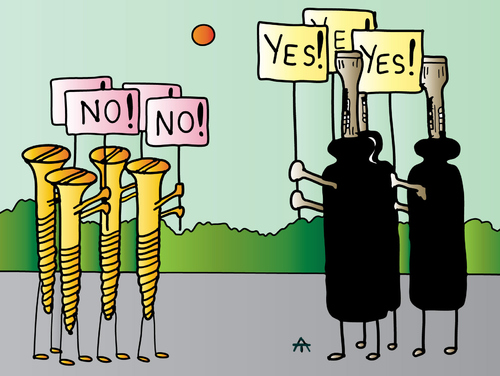
In this game everyone is given a certain number of coins or squares of paper (about 10). Everyone moves around the room starting conversations and asking each other questions. The only rule is that you cannot say the words YES or NO. If you accidentally say one of these words, you have to give a coin or square to the person who you said it to. Try to trick each other by asking questions that you would almost always answer with a yes or no. Think of other ways to trick your friends. Sometimes asking two quick questions in a row works well. (Especially tag questions: Are you new here? This is your first time in America, isn't it?). This game is a great way to practice using small talk and to add variety to your vocabulary. It also makes everyone laugh.

PORTAL DA LÍNGUA INGLESA has no responsibility for the persistence or accuracy of URLs for external or third-partly internet websites referred to in this post, and does not guarantee that any context on such websites are, or will remain, accurate or appropriate.
In some instances, I have been unable to trace the owners of the pictures used here; therefore, I would appreciate any information that would enable me to do so. Thank you very much.
Is something important missing? Report an error or suggest an improvement. Please, I strive for accuracy and fairness. If you see something that doesn't look right, contact me!
Your feedback is welcome. Please direct comments and questions to me at bruno_coriolano@hotmail.com
Did you spot a typo?
Do you have any tips or examples to improve this page?
Do you disagree with something on this page?

Use one of your social-media accounts to share this page:

quinta-feira, 6 de outubro de 2011

TEACHER'S CORNER: A well-balanced use of warmers and fillers.


Some tips on checking if you have got the use of warmers and fillers just right, and what you can do about it if you haven’t.

A well-balanced use of warmers and fillers

Using short two to ten minute energizing activities as warmers at the beginning of a lesson is a basic technique of language teaching that can make a huge difference to the atmosphere of a class, and therefore to how much students learn and how happy they are to come back to class next week. The same is true of using exercises in the middle of the class to give students a break and reenergize them. Like everything in life, though, you can have too much of a good thing. Below are some tips on checking if you have got the use of warmers and fillers just right, and what you can do about it if you haven’t.


Signs that you are using warmers too much

If any of the things below are true for you, you might want to think about cutting down the number of warmers you use or using them differently: